A legal expert system is a domain-specific expert system that uses artificial intelligence to emulate the decision-making abilities of a human expert in the field of law. Legal expert systems employ a rule base or knowledge base and an inference engine to accumulate, reference and produce expert knowledge on specific subjects within the legal domain. == Purpose == It has been suggested that legal expert systems could help to manage the rapid expansion of legal information and decisions that began to intensify in the late 1960s. Many of the first legal expert systems were created in the 1970s and 1980s. Lawyers were originally identified as primary target users of legal expert systems. Potential motivations for this work included: quicker delivery of legal advice; reduced time spent in repetitive, labour-intensive legal tasks; development of knowledge management techniques that were not dependent on staff; reduced overhead and labour costs and higher profitability for law firms; and reduced fees for clients. Some early development work was oriented toward the creation of automated judges. One of the first use cases was the encoding of the British Nationality Act at Imperial College carried out under the supervision of Marek Sergot and Robert Kowalski. Lance Elliot wrote: "The British Nationality Act was passed in 1981 and shortly thereafter was used as a means of showcasing the efficacy of using Artificial Intelligence (AI) techniques and technologies, doing so to explore how the at-the-time newly enacted statutory law might be encoded into a computerized logic-based formalization." The authors’ seminal article, "The British Nationality Act as a Logic Program," published in 1986 in the Communications of the ACM journal, is one of the first and best-known works in computational law, and one of the most widely cited papers in the field. In 2021, the Inaugural CodeX Prize was awarded to Robert Kowalski, Fariba Sadri, and Marek Sergot in acknowledgment of their groundbreaking work on the application of logic programming to the formalization and analysis of the British Nationality Act. Later work on legal expert systems has identified potential benefits to non-lawyers as a means to increase access to legal knowledge. Legal expert systems can also support administrative processes, facilitate decision-making processes, automate rule-based analyses, and exchange information directly with citizen-users. == Types == === Architectural variations === Rule-based expert systems rely on a model of deductive reasoning that utilizes "If A, then B" rules. In a rule-based legal expert system, information is represented in the form of deductive rules within the knowledge base. In rule-based legal expert systems, logic programming has historically been applied to automate complex compliance paperwork. A notable early example designed for high-volume regulatory filings was the 1999 Intelligent Filing Manager (INTELLIFM), which utilized Prolog rules as its core inference engine to automate the generation, publishing, and population of structured forms via distributed COM interfaces. Case-based reasoning models, which store and manipulate examples or cases, hold the potential to emulate an analogical reasoning process thought to be well-suited for the legal domain. This model effectively draws on known experiences our outcomes for similar problems. A neural net relies on a computer model that mimics that structure of a human brain, and operates in a very similar way to the case-based reasoning model. This expert system model is capable of recognizing and classifying patterns within the realm of legal knowledge and dealing with imprecise inputs. Fuzzy logic models attempt to create 'fuzzy' concepts or objects that can then be converted into quantitative terms or rules that are indexed and retrieved by the system. In the legal domain, fuzzy logic can be used for rule-based and case-based reasoning models. === Theoretical variations === Some legal expert system architects have adopted a very practical approach, employing scientific modes of reasoning within a given set of rules or cases. Others have opted for a broader philosophical approach inspired by jurisprudential reasoning modes emanating from established legal theoreticians. === Functional variations === Some legal expert systems aim to arrive at a particular conclusion in law, while others are designed to predict a particular outcome. An example of a predictive system is one that predicts the outcome of judicial decisions, the value of a case, or the outcome of litigation. == Reception == Many forms of legal expert systems have become widely used and accepted by both the legal community and the users of legal services. == Challenges == === Domain-related problems === The inherent complexity of law as a discipline raises immediate challenges for legal expert system knowledge engineers. Legal matters often involve interrelated facts and issues, which further compound the complexity. Factual uncertainty may also arise when there are disputed versions of factual representations that must be input into an expert system to begin the reasoning process. === Computerized problem solving === The limitations of most computerized problem solving techniques inhibit the success of many expert systems in the legal domain. Expert systems typically rely on deductive reasoning models that have difficulty according degrees of weight to certain principles of law or importance to previously decided cases that may or may not influence a decision in an immediate case or context. === Representation of legal knowledge === Expert legal knowledge can be difficult to represent or formalize within the structure of an expert system. For knowledge engineers, challenges include: Open texture: Law is rarely applied in an exact way to specific facts, and exact outcomes are rarely a certainty. Statutes may be interpreted according to different linguistic interpretations, reliance on precedent cases or other contextual factors including a particular judge's conception of fairness. The balancing of reasons: Many arguments involve considerations or reasons that are not easily represented in a logical way. For instance, many constitutional legal issues are said to balance independently well-established considerations for state interests against individual rights. Such balancing may draw on extra-legal considerations that would be difficult to represent logically in an expert system. Indeterminacy of legal reasoning: In the adversarial arena of law, it is common to have two strong arguments on a single point. Determining the 'right' answer may depend on a majority vote among expert judges, as in the case of an appeal. === Time and cost effectiveness === Creating a functioning expert system requires significant investments in software architecture, subject matter expertise and knowledge engineering. Faced with these challenges, many system architects restrict the domain in terms of subject matter and jurisdiction. The consequence of this approach is the creation of narrowly focused and geographically restricted legal expert systems that are difficult to justify on a cost-benefit basis. Current applications of AI in the legal field utilize machines to review documents, particularly when a high level of completeness and confidence in the quality of document analysis is depended upon, such as in instances of litigation and where due diligence play a role. Among the numerically most quantifiable advantages of AI in the legal field are the time and money saving impact by freeing lawyers from having to spend inordinate amounts of their valuable time on routine tasks, aiding in setting free lawyers’ creative energy by reducing stress. This in turn increases the rate of case load reduction by accomplishing better results in less time, which unlocks potential additional revenue per unit of time spend on a case. The cost of setting up and maintaining AI systems in law is more than offset by the attained savings through increased efficacy; unbalanced cost can be assigned to clients. === Lack of correctness in results or decisions === Legal expert systems may lead non-expert users to incorrect or inaccurate results and decisions. This problem could be compounded by the fact that users may rely heavily on the correctness or trustworthiness of results or decisions generated by these systems. == Examples == ASHSD-II is a hybrid legal expert system that blends rule-based and case-based reasoning models in the area of matrimonial property disputes under English law. CHIRON is a hybrid legal expert system that blends rule-based and case-based reasoning models to support tax planning activities under United States tax law and codes. JUDGE is a rule-based legal expert system that deals with sentencing in the criminal legal domain for offences relating to murder, assault and manslaughter. Legislate is a knowledge graph powered contract management platform whi
Clipping (computer graphics)
Clipping, in the context of computer graphics, is a method to selectively enable or disable rendering operations within a defined region of interest. Mathematically, clipping can be described using the terminology of constructive geometry. A rendering algorithm only draws pixels in the intersection between the clip region and the scene model. Lines and surfaces outside the view volume (aka. frustum) are removed. Clip regions are commonly specified to improve render performance. Pixels that will be drawn are said to be within the clip region. Pixels that will not be drawn are outside the clip region. More informally, pixels that will not be drawn are said to be "clipped." == In 2D graphics == In two-dimensional graphics, a clip region may be defined so that pixels are only drawn within the boundaries of a window or frame. Clip regions can also be used to selectively control pixel rendering for aesthetic or artistic purposes. In many implementations, the final clip region is the composite (or intersection) of one or more application-defined shapes, as well as any system hardware constraints In one example application, consider an image editing program. A user application may render the image into a viewport. As the user zooms and scrolls to view a smaller portion of the image, the application can set a clip boundary so that pixels outside the viewport are not rendered. In addition, GUI widgets, overlays, and other windows or frames may obscure some pixels from the original image. In this sense, the clip region is the composite of the application-defined "user clip" and the "device clip" enforced by the system's software and hardware implementation. Application software can take advantage of this clip information to save computation time, energy, and memory, avoiding work related to pixels that aren't visible. == In 3D graphics == In three-dimensional graphics, the terminology of clipping can be used to describe many related features. Typically, "clipping" refers to operations in the plane that work with rectangular shapes, and "culling" refers to more general methods to selectively process scene model elements. This terminology is not rigid, and exact usage varies among many sources. Scene model elements include geometric primitives: points or vertices; line segments or edges; polygons or faces; and more abstract model objects such as curves, splines, surfaces, and even text. In complicated scene models, individual elements may be selectively disabled (clipped) for reasons including visibility within the viewport (frustum culling); orientation (backface culling), obscuration by other scene or model elements (occlusion culling, depth- or "z" clipping). Sophisticated algorithms exist to efficiently detect and perform such clipping. Many optimized clipping methods rely on specific hardware acceleration logic provided by a graphics processing unit (GPU). The concept of clipping can be extended to higher dimensionality using methods of abstract algebraic geometry. === Near clipping === Beyond projection of vertices & 2D clipping, near clipping is required to correctly rasterise 3D primitives; this is because vertices may have been projected behind the eye. Near clipping ensures that all the vertices used have valid 2D coordinates. Together with far-clipping it also helps prevent overflow of depth-buffer values. Some early texture mapping hardware (using forward texture mapping) in video games suffered from complications associated with near clipping and UV coordinates. === Occlusion clipping (Z- or depth clipping) === In 3D computer graphics, "Z" often refers to the depth axis in the system of coordinates centered at the viewport origin: "Z" is used interchangeably with "depth", and conceptually corresponds to the distance "into the virtual screen." In this coordinate system, "X" and "Y" therefore refer to a conventional cartesian coordinate system laid out on the user's screen or viewport. This viewport is defined by the geometry of the viewing frustum, and parameterizes the field of view. Z-clipping, or depth clipping, refers to techniques that selectively render certain scene objects based on their depth relative to the screen. Most graphics toolkits allow the programmer to specify a "near" and "far" clip depth, and only portions of objects between those two planes are displayed. A creative application programmer can use this method to render visualizations of the interior of a 3D object in the scene. For example, a medical imaging application could use this technique to render the organs inside a human body. A video game programmer can use clipping information to accelerate game logic. For example, a tall wall or building that occludes other game entities can save GPU time that would otherwise be spent transforming and texturing items in the rear areas of the scene; and a tightly integrated software program can use this same information to save CPU time by optimizing out game logic for objects that aren't seen by the player. == Algorithms == Line clipping algorithms: Cohen–Sutherland Liang–Barsky Fast-clipping Cyrus–Beck Nicholl–Lee–Nicholl Skala O(lg N) algorithm Polygon clipping algorithms: Greiner–Hormann Sutherland–Hodgman Weiler–Atherton Vatti Rendering methodologies Painter's algorithm
AI: When a Robot Writes a Play
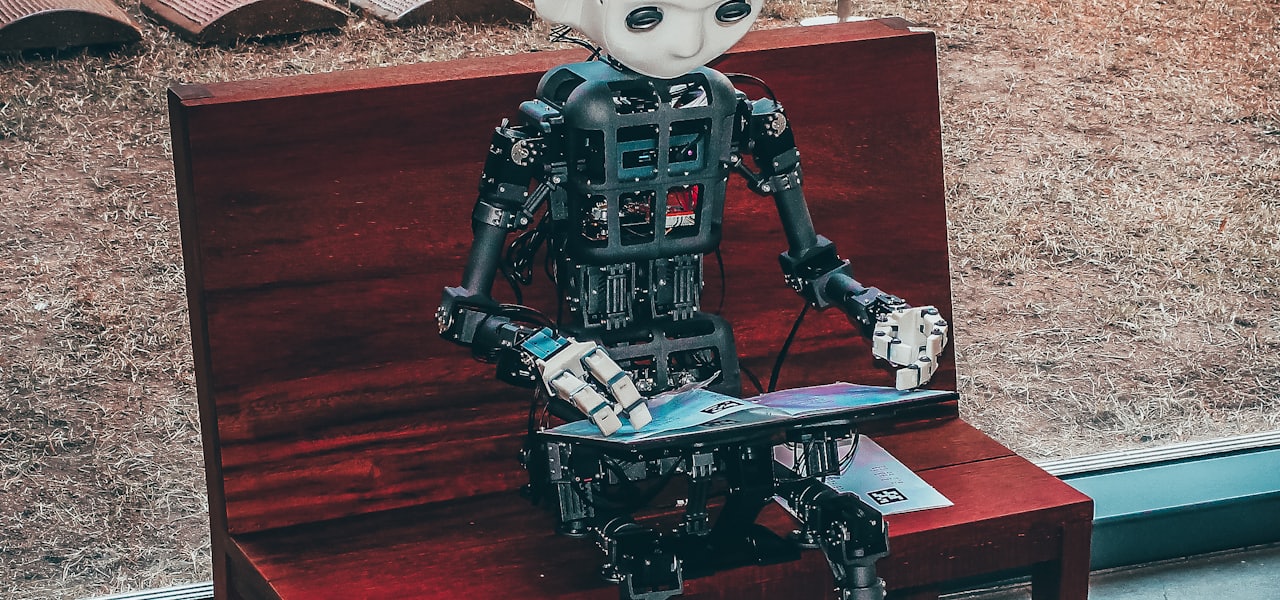
AI: When a Robot Writes a Play (in Czech: AI: Když robot píše hru) is a 2021 experimental theatre play, where 90% of its script was automatically generated by artificial intelligence (the GPT-2 language model). The play is in Czech language, but an English version of the script also exists. == Creation == The play is the first result of the THEaiTRE research project, aiming to commemorate the centenary of the R.U.R. play by Karel Čapek by investigating to what extent artificial intelligence could be used to create theatre play scripts. The script of the play was created using the THEaiTRobot tool, based on the GPT-2 language model. First, the play dramaturge, David Košťák, described the initial setting of each scene in a few sentences, and wrote the first line for each character. Next, THEaiTRobot suggested a continuation of the script, which the dramaturge could use, reject, or use part of it and let the tool generate a new continuation. Another option was to manually insert another line or a scenic remark. The script was generated in English and was automatically translated to Czech by the state-of-the-art CUBBITT machine translation tool. The resulting script was then further post-edited by the dramaturge. The resulting script was made freely available for non-commercial use both in English and in Czech, with marked manually inserted texts and manual edits. The analysis shows that 90% of the English script is automatically generated, with 10% manually written or manually post-edited. In the Czech script, a larger amount of edits were made, but the analysis claims that these additional edits are corrections of errors of the automated translation and stylistic corrections which do not change the meaning of the lines as represented by the English script, but rather bring the Czech script closer to the English one. == Characters == The play contains 9 characters. The Robot appears in all the scenes, while each of the other characters appears in only one scene. Robot – The lead character, a male humanoid robot. Master – An old man, the creator of the Robot. Boy – A schoolboy. Masseuse – A sex worker in a brothel. Stranger – An engineer. Man. Psychologist. Administrator – A female clerk at an employment agency. Actress – A film actress and a model in a robot-like costume. == Plot == The play is composed of 8 scenes. It tells the story of a humanoid robot, who encounters 8 other characters and engages into various typically human situations and activities, related to death, love, sex, violence, etc. The individual scenes are not tightly linked, but there are some linking points, such as the central character of the robot or some repeated and developing themes, such as the robot's search for love. The scenes often contain some absurd turns and it is often hard to find sense in them. It is therefore a very complicated piece interpretationally, requiring the director and the actors to invest a lot of effort and creativity in finding a meaningful interpretation which would not deviate from the script. In the interpretation by Švanda theatre, who premiered the play and who also participated on the creation of the script, the scenes typically contain non-verbally expressed content which can add a lot to the meaning of the scene compared to what is contained in the actual script (as the script only contains the lines said by the characters). === Scene 1: Death === The play opens by the Robot parting with his dying Master. The Master gives the Robot several last lessons and talks with him about death, soul, and love. === Scene 2: Sense of Humour === In the second scene, the Robot meets a sad and angry Boy, who complains that he wants to go to school, that his girlfriend is crazy, that he wants to buy a car, etc. The Robot tries to help the Boy by giving him advice, but the Boy's reactions are quite negative and irritated. The Boy then repeatedly asks the Robot to tell him a joke; the Robot keeps refusing, but ultimately tells the following joke: When you are dead. When your children are dead. When your grandchildren are dead, I will be still alive. === Scene 3: Nightclub === The Robot wants to feel pleasure, so he goes to a "night club" (a brothel), where he meets a "Masseuse" (a prostitute). The Robot is initially "a bit cold", but eventually manages to enjoy the experience and falls in love with the Masseuse. In the Švanda theatre performance, the Robot and the Masseuse seem to have a sort of virtual sex without touching each other, reminiscent of the sex scene in Demolition Man. === Scene 4: Fear of the Dark === It is the night. The Robot is standing under a lamp, unable to move away from the light as he finds that he is afraid of the dark. He meets a Stranger, an engineer who tells him that robots don't have feelings and that people cannot be trusted, and keeps hurting him. In the Švanda theatre performance, the Man repeatedly zaps the Robot with some kind of electric pulse. === Scene 5: Killer Robot === A Man approaches the Robot and repeatedly asks him to kill him. Instead, the Robot sticks a finger into the Man's anus, which leads to an argument between the Man and the Robot. === Scene 6: Burn Out === The Robot meets a Psychologist, who keeps asking him lots of questions regarding his life, burnout feeling, love, relationships, and emotions. They also talk about the Robot using a device called emotion machine which helps him to get rid of stress. === Scene 7: Search for Job === The Robot comes to an employment agency. He meets an Administrator and asks her to help him find a job. He expresses the wish to become an actor, and talks about his experience as a clown. He reveals his name to be Troy McClure, which is a character from The Simpsons who is an actor. In the Švanda theatre performance, the Administrator starts to seduce the Robot once his name is revealed, which he keeps ignoring; the Administrator then becomes irritated. === Scene 8: Love at First Sight === The Robot meets a human Actress in a robotic costume and falls in love with her immediately. The Actress is first reluctant, but the Robot manages to seduce her and she also falls in love with him. The Robot tells her about a binary world, in which he lives and where he will also take her. Ultimately, the Actress agrees, and the whole play concludes by the Robot and the Actress promising each to other to always be together. In the Švanda theatre performance, the Robot does not have a physical body in this scene, we can only hear his voice and see a pulsating light (based on the line in the script where the Robot says: "I have no body. So I don't need to wear clothes. You can't see me, you only hear me."), and the Actress eventually also agrees to lose her physical body so that she can be with the Robot forever. == Theatrical performances == The play premiered on 26 February 2021 in Švanda Theatre in Prague, Czech Republic, directed by Daniel Hrbek. Due to the COVID-19 pandemic, the play was not played in front of a live audience, but it was broadcast online, in Czech language with English subtitles. The play was followed by a panel discussion by the project members and experts on artificial intelligence. The premiere was viewed by 13,498 spectators worldwide. A short trailer of the premiere is available on YouTube. In 2021, after the opening of the theatres in the Czech Republic to spectators, the play can be viewed at Švanda Theatre. The performance takes approximately 60 minutes, and is followed by a discussion of the creators with the audience. The derniere is planned for 4 February 2023. == Reception == The play received a number of reviews, both in its country of origin as well as internationally. It is praised as first of its kind, although some reviewers note the similarity to previous works, such as the musical Beyond the Fence, the play Lifestyle of the Richard and Family, or the short movie Sunspring; however, these works used less advanced technology, and either were very short (Sunspring) or necessitated a larger amount of human interventions. The reviewers note that the script is far from perfect, with many inconsistencies and nonsensical parts, and conclude that the technology is definitely not yet ready to replace human authors; however, some find some parts of the script frighteningly human-like. The amount of human intervention is a somewhat controversial topic, with some reviewers finding the human influence too large (especially in interpreting the script and putting the play on scene), while others feel that a greater amount of human intervention would have been favorable as this could greatly improve the quality of the play. The reviews also frequently comment on the amount of sex, violence and strong language in the play; this can be attributed to the method used for creating the script, where the GPT-2 language model reflects topics and language common in the human-written articles on the internet that were used to train the model. Furthermore, some r
Task Force on Process Mining
The IEEE Task Force on Process Mining (TFPM) is a non-commercial association for process mining. The IEEE (Institute of Electrical and Electronics Engineers) Task Force on Process Mining was established in October 2009 as part of the IEEE Computational Intelligence Society at the Eindhoven University of Technology. The task force is supported by over 80 organizations and has around 750 members. The main goal of the task force is to promote the research, development, education, and understanding of process mining. == About == In 2012, the IEEE World Congress on Computational Intelligence/ IEEE Congress on Evolutionary Computation held a session on Process Mining. Process mining is a type of research that is a mix of computational intelligence and data mining, as well as process modeling and analysis. === Activities and organization === The Task Force on Process Mining has a Steering Committee and an Advisory Board. The Steering Committee, was chaired by Wil van der Aalst in its inception in 2009, defined 15 action lines. These include the organization of the annual International Process Mining Conference (ICPM) series, standardization efforts leading to the IEEE XES standard for storing and exchanging event data, and the Process Mining Manifesto which was translated into 16 languages. The Task Force on Process Mining also publishes a newsletter, provides data sets, organizes workshops and competitions, and connects researchers and practitioners. In 2016, the IEEE Standards Association published the IEEE Standard for Extensible Event Stream (XES), which is a widely accepted file format by the process mining community. As of 2023, Boudewijn van Dongen serves as chair of the Steering Committee. Wil van der Aalst and Moe Wynn both serve as vice-chair of the Steering Committee.
Algorithmic management
Algorithmic management is a term used to describe certain labor management practices in the contemporary digital economy. In scholarly uses, the term was initially coined in 2015 by Min Kyung Lee, Daniel Kusbit, Evan Metsky, and Laura Dabbish to describe the managerial role played by algorithms on the Uber and Lyft platforms, but has since been taken up by other scholars to describe more generally the managerial and organisational characteristics of platform economies. However, digital direction of labor was present in manufacturing already since the 1970s and algorithmic management is becoming increasingly widespread across a wide range of industries. The concept of algorithmic management can be broadly defined as the delegation of managerial functions to algorithmic and automated systems. Algorithmic management has been enabled by "recent advances in digital technologies" which allow for the real-time and "large-scale collection of data" which is then used to "improve learning algorithms that carry out learning and control functions traditionally performed by managers". The term does not refer to a specific underlying technology, and encompasses the design choices, organisational policies, and governance that surround the managerial use of algorithms in workplaces. In the contemporary workplace, firms employ an ecology of accounting devices, such as "rankings, lists, classifications, stars and other symbols' in order to effectively manage their operations and create value without the need for traditional forms of hierarchical control." Many of these devices fall under the label of what is called algorithmic management, and were first developed by companies operating in the sharing economy or gig economy, functioning as effective labor and cost cutting measures. The Data&Society explainer of the term, for example, describes algorithmic management as 'a diverse set of technological tools and techniques that structure the conditions of work and remotely manage workforces. Data&Society also provides a list of five typical features of algorithmic management: Prolific data collection and surveillance of workers through technology; Real-time responsiveness to data that informs management decisions; Automated or semi-automated decision-making; Transfer of performance evaluations to rating systems or other metrics; and The use of "nudges" and penalties to indirectly incentivize worker behaviors. Proponents of algorithmic management claim that it "creates new employment opportunities, better and cheaper consumer services, transparency and fairness in parts of the labour market that are characterised by inefficiency, opacity and capricious human bosses." On the other hand, critics of algorithmic management claim that the practice leads to several issues, especially as it impacts the employment status of workers managed by its new array of tools and techniques. == History of the term == "Algorithmic management" was first described by Lee, Kusbit, Metsky, and Dabbish in 2015 in their study of the Uber and Lyft platforms. In their study, Lee et al. termed "software algorithms that assume managerial functions and surrounding institutional devices that support algorithms in practice" algorithmic management. Software algorithms, it was said, are increasingly used to "allocate, optimize, and evaluate work" by platforms in managing their vast workforces. In Lee et al.'s paper on Uber and Lyft this included the use of algorithms to assign work to drivers, as mechanisms to optimise pricing for services, and as systems for evaluating driver performance. In 2016, Alex Rosenblat and Luke Stark sought to extend on this understanding of algorithmic management "to elucidate on the automated implementation of company policies on the behaviours and practices of Uber drivers." Rosenblat and Stark found in their study that algorithmic management practices contributed to a system beset by power asymmetries, where drivers had little control over "critical aspects of their work", whereas Uber had far greater control over the labor of its drivers. Since this time, studies of algorithmic management have extended the use of the term to describe the management practices of various firms, where, for example, algorithms "are taking over scheduling work in fast food restaurants and grocery stores, using various forms of performance metrics ad even mood... to assign the fastest employees to work in peak times." Algorithmic management is seen to be especially prevalent in gig work on platforms, such as on Upwork and Deliveroo, and in the sharing economy, such as in the case of Airbnb. Furthermore, recent research has defined sub-constructs that fall under the umbrella term of algorithmic management, for example, "algorithmic nudging". A Harvard Business Review article published in 2021 explains: "Companies are increasingly using algorithms to manage and control individuals not by force, but rather by nudging them into desirable behavior — in other words, learning from their personalized data and altering their choices in some subtle way." While the concept builds on nudging theory popularized by University of Chicago economist Richard Thaler and Harvard Law School professor Cass Sunstein, "due to recent advances in AI and machine learning, algorithmic nudging is much more powerful than its non-algorithmic counterpart. With so much data about workers' behavioral patterns at their fingertips, companies can now develop personalized strategies for changing individuals' decisions and behaviors at large scale. These algorithms can be adjusted in real-time, making the approach even more effective." == Relationships with other labor management practices == Algorithmic management has been compared and contrasted with other forms of management, such as Scientific management approaches, as pioneered by Frederick Taylor in the early 1900s. Henri Schildt has called algorithmic management "Scientific management 2.0", where management "is no longer a human practice, but a process embedded in technology." Similarly, Kathleen Griesbach, Adam Reich, Luke Elliott-Negri, and Ruth Milkman suggest that, while "algorithmic control over labor may be relatively new, it replicates many features of older mechanisms of labor control." On the other hand, some commentators have argued that algorithmic management is not simply a new form of Scientific management or digital Taylorism, but represents a distinct approach to labor control in platform economies. David Stark and Ivana Pais, for example, state that, "In contrast to Scientific Management at the turn of the twentieth century, in the algorithmic management of the twenty-first century there are rules but these are not bureaucratic, there are rankings but not ranks, and there is monitoring but it is not disciplinary. Algorithmic management does not automate bureaucratic structures and practices to create some new form of algorithmic bureaucracy. Whereas the devices and practices of Taylorism were part of a system of hierarchical supervision, the devices and practices of algorithmic management take place within a different economy of attention and a new regime of visibility. Triangular rather than vertical, and not as a panopticon, the lines of vision in algorithmic management are not lines of supervision." Similarly, Data&Society's explainer for algorithmic management claims that the practice represents a marked departure from earlier management structures that more strongly rely on human supervisors to direct workers. In analyzing the difference and the similarities to previous management styles, David Stark and Pieter Vanden Broeck expand the applicability of algorithmic management beyond the workplace. They develop a theory of algorithmic management in terms of broader changes in the shape and structure of organization in the 21st century, attentive to the erosion of organization's boundaries whereby heterogeneous actors, assets, and activities, are coopted regardless of their place in organizational space. Stark and Vanden Broeck propose the following means of differentiating algorithmic management from other historical managerial paradigms: == Issues == Algorithmic management can provide an effective and efficient means of workforce control and value creation in the contemporary digital economy. However, commentators have highlighted several issues that algorithmic management poses, especially for the workers it manages. Criticisms of the practice often highlight several key issues pertaining to algorithmic management practices, such as the imperfection and scope of its surveillance and control measures, which also threaten to lock workers out of key decision-making processes; its lack of transparency for users and information asymmetries; its potential for bias and discrimination; its dehumanizing tendencies; and its potential to create conditions which sidestep traditional employer-employee accountability. This last point has been especi
Neural field
In machine learning, a neural field (also known as implicit neural representation, neural implicit, or coordinate-based neural network), is a mathematical field that is fully or partially parametrized by a neural network. Initially developed to tackle visual computing tasks, such as rendering or reconstruction (e.g., neural radiance fields), neural fields emerged as a promising strategy to deal with a wider range of problems, including surrogate modelling of partial differential equations, such as in physics-informed neural networks. Differently from traditional machine learning algorithms, such as feed-forward neural networks, convolutional neural networks, or transformers, neural fields do not work with discrete data (e.g. sequences, images, tokens), but map continuous inputs (e.g., spatial coordinates, time) to continuous outputs (i.e., scalars, vectors, etc.). This makes neural fields not only discretization independent, but also easily differentiable. Moreover, dealing with continuous data allows for a significant reduction in space complexity, which translates to a much more lightweight network. == Formulation and training == According to the universal approximation theorem, provided adequate learning, sufficient number of hidden units, and the presence of a deterministic relationship between the input and the output, a neural network can approximate any function to any degree of accuracy. Hence, in mathematical terms, given a field y = Φ ( x ) {\textstyle {\boldsymbol {y}}=\Phi ({\boldsymbol {x}})} , with x ∈ R n {\displaystyle {\boldsymbol {x}}\in \mathbb {R} ^{n}} and y ∈ R m {\displaystyle {\boldsymbol {y}}\in \mathbb {R} ^{m}} , a neural field Ψ θ {\displaystyle \Psi _{\theta }} , with parameters θ {\displaystyle {\boldsymbol {\theta }}} , is such that: Ψ θ ( x ) = y ^ ≈ y {\displaystyle \Psi _{\theta }({\boldsymbol {x}})={\hat {\boldsymbol {y}}}\approx {\boldsymbol {y}}} === Training === For supervised tasks, given N {\displaystyle N} examples in the training dataset (i.e., ( x i , y i ) ∈ D t r a i n , i = 1 , … , N {\displaystyle ({\boldsymbol {x_{i}}},{\boldsymbol {y_{i}}})\in {\mathcal {D_{train}}},i=1,\dots ,N} ), the neural field parameters can be learned by minimizing a loss function L {\displaystyle {\mathcal {L}}} (e.g., mean squared error). The parameters θ ~ {\displaystyle {\tilde {\theta }}} that satisfy the optimization problem are found as: θ ~ = argmin θ 1 N ∑ ( x i , y i ) ∈ D t r a i n L ( Ψ θ ( x i ) , y i ) {\displaystyle {\tilde {\boldsymbol {\theta }}}={\underset {\boldsymbol {\theta }}{\text{argmin}}}\;{\frac {1}{N}}\sum _{({\boldsymbol {x_{i}}},{\boldsymbol {y_{i}}})\in {\mathcal {D_{train}}}}{\mathcal {L}}(\Psi _{\theta }({\boldsymbol {x}}_{i}),{\boldsymbol {y}}_{i})} Notably, it is not necessary to know the analytical expression of Φ {\displaystyle \Phi } , for the previously reported training procedure only requires input-output pairs. Indeed, a neural field is able to offer a continuous and differentiable surrogate of the true field, even from purely experimental data. Moreover, neural fields can be used in unsupervised settings, with training objectives that depend on the specific task. For example, physics-informed neural networks may be trained on just the residual. === Spectral bias === As for any artificial neural network, neural fields may be characterized by a spectral bias (i.e., the tendency to preferably learn the low frequency content of a field), possibly leading to a poor representation of the ground truth. In order to overcome this limitation, several strategies have been developed. For example, SIREN uses sinusoidal activations, while the Fourier-features approach embeds the input through sines and cosines. == Conditional neural fields == In many real-world cases, however, learning a single field is not enough. For example, when reconstructing 3D vehicle shapes from Lidar data, it is desirable to have a machine learning model that can work with arbitrary shapes (e.g., a car, a bicycle, a truck, etc.). The solution is to include additional parameters, the latent variables (or latent code) z ∈ R d {\displaystyle {\boldsymbol {z}}\in \mathbb {R} ^{d}} , to vary the field and adapt it to diverse tasks. === Latent code production === When dealing with conditional neural fields, the first design choice is represented by the way in which the latent code is produced. Specifically, two main strategies can be identified: Encoder: the latent code is the output of a second neural network, acting as an encoder. During training, the loss function is the objective used to learn the parameters of both the neural field and the encoder. Auto-decoding: each training example has its own latent code, jointly trained with the neural field parameters. When the model has to process new examples (i.e., not originally present in the training dataset), a small optimization problem is solved, keeping the network parameters fixed and only learning the new latent variables. Since the latter strategy requires additional optimization steps at inference time, it sacrifices speed, but keeps the overall model smaller. Moreover, despite being simpler to implement, an encoder may harm the generalization capabilities of the model. For example, when dealing with a physical scalar field f : R 2 → R {\displaystyle f:\mathbb {R} ^{2}\rightarrow \mathbb {R} } (e.g., the pressure of a 2D fluid), an auto-decoder-based conditional neural field can map a single point to the corresponding value of the field, following a learned latent code z {\displaystyle {\boldsymbol {z}}} . However, if the latent variables were produced by an encoder, it would require access to the entire set of points and corresponding values (e.g. as a regular grid or a mesh graph), leading to a less robust model. === Global and local conditioning === In a neural field with global conditioning, the latent code does not depend on the input and, hence, it offers a global representation (e.g., the overall shape of a vehicle). However, depending on the task, it may be more useful to divide the domain of x {\displaystyle {\boldsymbol {x}}} in several subdomains, and learn different latent codes for each of them (e.g., splitting a large and complex scene in sub-scenes for a more efficient rendering). This is called local conditioning. === Conditioning strategies === There are several strategies to include the conditioning information in the neural field. In the general mathematical framework, conditioning the neural field with the latent variables is equivalent to mapping them to a subset θ ∗ {\displaystyle {\boldsymbol {\theta }}^{}} of the neural field parameters: θ ∗ = Γ ( z ) {\displaystyle {\boldsymbol {\theta }}^{}=\Gamma ({\boldsymbol {z}})} In practice, notable strategies are: Concatenation: the neural field receives, as input, the concatenation of the original input x {\displaystyle {\boldsymbol {x}}} with the latent codes z {\displaystyle {\boldsymbol {z}}} . For feed-forward neural networks, this is equivalent to setting θ ∗ {\displaystyle {\boldsymbol {\theta }}^{}} as the bias of the first layer and Γ ( z ) {\displaystyle \Gamma ({\boldsymbol {z}})} as an affine transformation. Hypernetworks: a hypernetwork is a neural network that outputs the parameters of another neural network. Specifically, it consists of approximating Γ ( z ) {\displaystyle \Gamma ({\boldsymbol {z}})} with a neural network Γ ^ γ ( z ) {\displaystyle {\hat {\Gamma }}_{\gamma }({\boldsymbol {z}})} , where γ {\displaystyle {\boldsymbol {\gamma }}} are the trainable parameters of the hypernetwork. This approach is the most general, as it allows to learn the optimal mapping from latent codes to neural field parameters. However, hypernetworks are associated to larger computational and memory complexity, due to the large number of trainable parameters. Hence, leaner approaches have been developed. For example, in the Feature-wise Linear Modulation (FiLM), the hypernetwork only produces scale and bias coefficients for the neural field layers. === Meta-learning === Instead of relying on the latent code to adapt the neural field to a specific task, it is also possible to exploit gradient-based meta-learning. In this case, the neural field is seen as the specialization of an underlying meta-neural-field, whose parameters are modified to fit the specific task, through a few steps of gradient descent. An extension of this meta-learning framework is the CAVIA algorithm, that splits the trainable parameters in context-specific and shared groups, improving parallelization and interpretability, while reducing meta-overfitting. This strategy is similar to the auto-decoding conditional neural field, but the training procedure is substantially different. == Applications == Thanks to the possibility of efficiently modelling diverse mathematical fields with neural networks, neural fields have been applied to a wide range of problems: 3D scene reconstruction: neural fields can be used to model t
Information scientist
The term information scientist developed in the latter part of the twentieth century by Wm. Hovey Smith to describe an individual, usually with a relevant subject degree (such as one in Information and Computer Science - CIS) or high level of subject knowledge, providing focused information to scientific and technical research staff in industry. It is a role quite distinct from and complementary to that of a librarian. Developments in end-user searching, together with some convergence between the roles of librarian and information scientist, have led to a diminution in its use in this context, and the term information officer or information professional (information specialist) are also now used. The term was, and is, also used for an individual carrying out research in information science. Brian C. Vickery mentions that the Institute of Information Scientists (IIS) was established in London during 1958 and lists the criteria put forward by this institute "Criteria for Information Science" (appendix 1) as well as his own "Areas of study in information science" (appendix 2). The IIS merged with the Library Association in 2002 to form the Chartered Institute of Library and Information Professionals (CILIP). == Notable Information Scientists == See also Award of Merit - Association for Information Science and Technology Marcia Bates David Blair (information technologist) Samuel C. Bradford Michael Buckland John M. Carroll Blaise Cronin Emilia Currás Brenda Dervin Eugene Garfield Paul B. Kantor Frederick Wilfrid Lancaster Calvin Mooers Tefko Saracevic Linda C. Smith Robert Saxton Taylor Brian Campbell Vickery Thomas D. Wilson == Additional reading == Ellis, David and Merete Haugan. (1997) "Modelling the information seeking patterns of engineers and research scientists in an industrial environment" (Journal of Documentation, Volume 53(4): pp. 384–403) Poole, Alex H. (2024). "'There's a big difference between going through life with the wind at your back, and going through life leaning into the wind': Feminism in Post-World War II Information Science". Proceedings of the Association for Information Science and Technology. 61: 300–313. doi:10.1002/pra2.1029. Vickery, Brian Campbell (1988) "Essays presented to B. C. Vickery" (Journal of Documentation, Volume 44, pp. 199–283). Vickery, B. & Vickery, A. (1987) Information Science in theory and practice (London: Bowker-Saur, pp. 361–369)